How Are Siirt Pistachios Grown? The Production Process Step by Step
4 min readZaferler Kuruyemiş
From choosing the land to planting, irrigation, pruning and harvest — the full production cycle of the Siirt pistachio, explained by a grower.
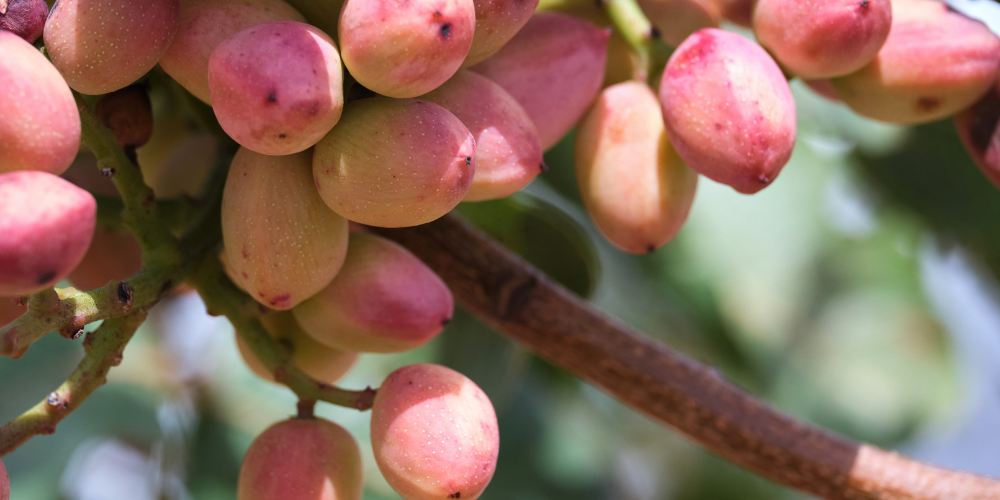
The Siirt pistachio is one of Türkiye's most valuable nut crops, thanks to its large kernel, high oil content, distinctive aroma and strong yield potential. The climate, soil structure and altitude of the Siirt and Batman region in particular give this variety a quality rarely matched anywhere in the world.
In this article we cover the whole production cycle in detail — from setting up a plantation and caring for the trees to the annual maintenance calendar and harvest methods.
1. An introduction to growing Siirt pistachios
The Siirt pistachio differs from other varieties in its cluster structure and large kernel. Growing it demands patience, planning and the right climate; handled professionally, it becomes a long-lived agricultural investment capable of generating a high income.
Yield depends largely on the following:
- Choosing the right site for the plantation
- Proper soil preparation
- The right rootstock and quality saplings
- Regular maintenance cycles
- Irrigation and fertilisation techniques
- The ideal harvest timing and method
Let us look at each stage in turn.
2. Setting up the plantation
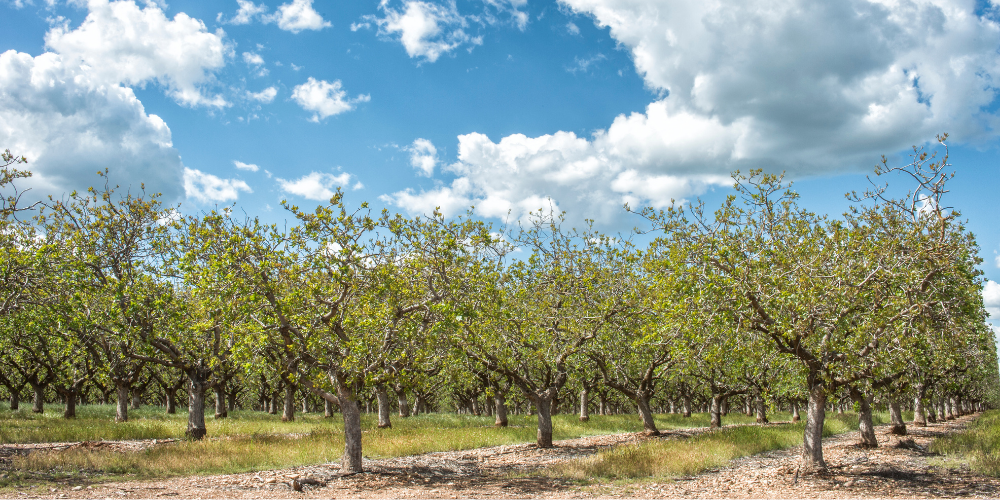
The most critical stage in growing Siirt pistachios is planning the plantation correctly. The trees can live for 80 to 100 years; every wrong decision affects yield for decades.
2.1 Choosing the right site
The ideal conditions for a high-quality, high-yield Siirt pistachio crop:
- Altitude: between 700 and 1,300 metres
- Soil: sandy loam, well drained, low in salinity
- Climate: continental, with hot summers and cold winters
- Daily sunshine: a minimum of 8 to 10 hours
The Siirt pistachio likes water but is sensitive to root rot. Stony land that does not hold water is therefore ideal.
2.2 Soil preparation
Before the plantation is established, the soil is prepared in these steps:
- Soil analysis: pH, minerals, organic matter and salinity are measured
- Deep ploughing: down to 50–70 cm
- Stone clearing: essential for root development
- Chisel or late ploughing: to loosen the surface
- Base fertiliser: well-rotted farmyard manure or organic material
Good soil preparation also ensures that the roots grow healthily in later years and that the tree withstands drought.
2.3 Planting and rootstock selection
Hardy rootstocks such as UCB-1, Pistacia terebinthus (terebinth) and Pistacia atlantica are generally used for Siirt pistachios.
Planting distances
- 7×7 metres (standard)
- 6×8 metres (mechanised plantations)
- 8×8 metres (large operations planned for high yield)
Planting is usually carried out between November and March. During planting:
- The sapling roots are trimmed
- Water is given to the planting hole
- The sapling is angled away from prevailing winds
- Trunk guards are fitted
Healthy planting directly determines the yield three to five years later.
3. Caring for Siirt pistachio trees
Siirt pistachios need regular care in their early years. As the tree matures the maintenance becomes easier, but keeping to the annual cycle is essential if yield is to increase.
3.1 Irrigation
As production in the Siirt region has modernised, drip irrigation has become the preferred method.
Advantages of drip irrigation
- Saves water
- Reduces the risk of salinisation
- Distributes nutrients evenly to the roots
- Increases yield by 30–50%
Regular irrigation matters enormously in the first years; mature trees are more drought-resistant.
3.2 Fertilisation programme
The ideal programme for pistachio trees:
- Nitrogen fertiliser in spring
- Phosphorus and potassium at the start of summer
- Organic fertiliser at the end of winter
Planning on the basis of leaf and soil analysis is the most reliable approach.
3.3 Pruning
Pruning raises yield directly. Its purposes are to:
- Strengthen the trunk
- Balance shoots and fruiting branches
- Improve airflow and sunlight
- Reduce the risk of disease
Siirt pistachio trees are usually pruned in late winter or early spring.
3.4 Managing disease and pests
Serious pest risk is low in Siirt pistachios, but problems such as kernel borer, root rot and shoot blight can occur. Regular inspection and biological controls keep production healthy.
4. The harvest
The harvest is the most exciting stage of the whole cycle, and one of the most critical in determining the quality of the crop.
4.1 Harvest timing
The Siirt pistachio harvest generally takes place from mid-September to early October. To judge the right moment, growers assess:
- Kernel fill
- Natural separation of the hull
- Firmness of the fruit
- Ripeness of the cluster
4.2 Harvest methods
1. Traditional shaking and gathering
- Branches are shaken by hand
- The nuts fall onto spread cloths
- The clusters are collected
2. Mechanical shakers
- Preferred in large orchards
- Lowers labour cost
- Provides fast, clean collection
4.3 Post-harvest processing
The harvested nuts must be processed quickly:
- Sorting
- Hull removal
- Drying in shaded areas
- Grading by size and quality
- Storage
Under the right conditions, Siirt pistachios keep for up to 12 months without deterioration.
5. Conclusion: growing Siirt pistachios takes patience and knowledge
The Siirt pistachio is one of Türkiye's agricultural products with a worldwide reputation. Quality production, however, requires correct plantation setup, regular maintenance, careful irrigation and modern harvest techniques. In professionally managed plantations the Siirt pistachio stands out as a crop with both high yield and high market value.
A well-run Siirt pistachio orchard is a long-term agricultural investment — and a significant contribution to quality nut production.